
Neither am I. I think that this is a drawback of software controlled lenses. Many mechanical lenses can be repaired. This is far more difficult for software controlled lenses, I think. The answer Sigma gave that the majority of lenses can be repaired may hold for lenses that are mainly mechanical.I'll admit I'm not nearly as concerned about and sensitive to this situation as you are.
L-MOUNT Forum
You are using an out of date browser. It may not display this or other websites correctly.
You should upgrade or use an alternative browser.
You should upgrade or use an alternative browser.
My 70-200 f4 "Pro" has died
- Thread starter pdk42
- Start date

Vale46
Well-Known Member
- Joined
- May 2, 2023
- Messages
- 217
I don't think so. Even OM System/ Olympus is able to repair lenses for years. And they have a price list for each lens repair.Neither am I. I think that this is a drawback of software controlled lenses. Many mechanical lenses can be repaired. This is far more difficult for software controlled lenses, I think. The answer Sigma gave that the majority of lenses can be repaired may hold for lenses that are mainly mechanical.
In my opinion Panasonic wants to avoid having to deal with spare parts.
GeorgeHudetz
Well-Known Member
- Joined
- Mar 21, 2023
- Messages
- 898
Nor am I. I am going to continue to buy & use the lenses that make the most sense for me. The 24-105, 70-200 F4, 100-500 & 14-28 are all unique lenses that Sigma has no direct answer for. Not to mention the 20-60, etc.Neither am I.
It is *very* disappointing to hear that the industry as a whole is moving towards a “replace instead of fix” approach, and I applaud Sigma for perhaps being at least somewhat of a holdout in that regard, but until somebody can convince me with realistic statistical numbers that a given brand stands out above (or below) the rest in terms of failure rates (and how can they?) I’m going to buy what makes sense for me.
Having said that, I do think Sigma is unique in the industry, being privately held, and I do recall reading comments from Roger on lens rentals about how they respond to concerns about quality. So certainly they are worthy of patronage and even a bit of loyalty.
In my country shops sell photographic gear with a 5 year warranty. My guess is that a lens will be replaced by a new one if I would offer a lens for repair.It is *very* disappointing to hear that the industry as a whole is moving towards a “replace instead of fix” approach,
In over 45 years time I never had a broken lens. A few years ago I had a decentered Pentax 16-85mm lens out of warranty. I sent it to the official Pentax repair centre, Rudiger Maerz in Hamburg. I had to pay about 200 euros to have it fixed. When the lens came back the lens was no longer decentered at the range of 60-85mm, but at the range of 16-28mm. I simply wasted 200 euros.
A Garmin navigation device can be revised (not repaired) at some 70% of the price when new. You will get a new copy. So when you have a broken screen (5 euros worth) it will be a very expensive replacement.
Lenses are not purely mechanical any more, but electronic, software controlled devices.

pdk42
Moderator
- Joined
- Dec 5, 2022
- Messages
- 2,658
What do you mean by "software controlled lenses"?Neither am I. I think that this is a drawback of software controlled lenses. Many mechanical lenses can be repaired. This is far more difficult for software controlled lenses, I think. The answer Sigma gave that the majority of lenses can be repaired may hold for lenses that are mainly mechanical.
What do you mean by "software controlled lenses"?
For more than 45 years I have used Pentax gear. The lenses released in the digital era were constructed in the traditional way. Of course many lenses suffered from barrel , pincushion, or moustache distortion. But only in a slight way. Tom Niemann found a way to correct the distorions and developed a plugin for Photoshop (Elements) and called it PTLens. There is no firmware (software) in Pentax lenses.
Companies,such as Panasonic, delevelop lenses which make use of firmware to correct lens faults such as distortions. The distortions are far worse. If the barrel distortion at the wide end of a zoom would not be corrected the lens would be unusuable. But the firmware in the lenses also control focussing, CA and more things. Panasonic regularly offers firmware updates for lenses.
The advantage of software controlled lenses is that UWA can be combined with tele, such as your Sigma 20-200mm. Such as lens was not possible in the past.
But the firmware in the lenses does not correct distortions perfectly, especially at the wide end. Therefore I use Lensfun, which has distortion profiles and is used by many software developers, also commercial.
No doubt. the lenses can be reapaired. But the technician has to be a specialist with training for it and must have special devices to check all functions. The repair costs will be very high. My guess is that it will be cheaper (and better for the customer) to replace a broken item, than repair itOk, but I'm not seeing how this can make them unrepairable.
I don't know how old your lens is, but if you contact the sales department to 'complain' about the 'poor' qual;ity of the pro lens, I would not be surprised that you may get a new copy. Panasonic will do much to improve their marketshare. An unhappy customer who complains about the poor quality of Panasonic lenses, will do them a lot of harm. Just send them a link to them of the computer forums where you complain about their poor service and poor products. I hope it will help you.
pdk42
Moderator
- Joined
- Dec 5, 2022
- Messages
- 2,658
But it seems that Sigma, whose lenses are just as complex, offer comprehensive spare parts and repairers seem fine with repairing them. It's only Panasonic that seem to have a "do no resuscitate" policy for their lenses.No doubt. the lenses can be reapaired. But the technician has to be a specialist with training for it and must have special devices to check all functions. The repair costs will be very high. My guess is that it will be cheaper (and better for the customer) to replace a broken item, than repair it
I've tried this approach. Panasonic just ignore my mails (including one to customer.complaints@eu.panasonic.com). I did manage to engage with a member of the UK support team via a web chat, but all they would do was sympathise and offer me a new lens with a small discount. I must say that I'm finding Panasonic's customer support approach pretty awful.I don't know how old your lens is, but if you contact the sales department to 'complain' about the 'poor' qual;ity of the pro lens, I would not be surprised that you may get a new copy. Panasonic will do much to improve their marketshare. An unhappy customer who complains about the poor quality of Panasonic lenses, will do them a lot of harm. Just send them a link to them of the computer forums where you complain about their poor service and poor products. I hope it will help you.
I've tried this approach.
What about:
#1 Panasonic LUMIX Lens Service and Repairs UK
DKAVS is the LUMIX PRO Service Centre in the UK, specialising in Panasonic lens service and repair. Fast and Efficient Engineers, 100% Genuine Parts!
 www.dkavs.co.uk
You can always send a mail and ask for details.
pdk42
Moderator
- Joined
- Dec 5, 2022
- Messages
- 2,658
Thanks, but they are the people to whom I already sent my lens and who told me that it's unrepairable because Panasonic do not provide spare parts.What about:
#1 Panasonic LUMIX Lens Service and Repairs UK
DKAVS is the LUMIX PRO Service Centre in the UK, specialising in Panasonic lens service and repair. Fast and Efficient Engineers, 100% Genuine Parts!
You can always send a mail and ask for details.

Jonathan-Mac
Well-Known Member
- Joined
- Apr 12, 2022
- Messages
- 1,019
For more than 45 years I have used Pentax gear. The lenses released in the digital era were constructed in the traditional way. Of course many lenses suffered from barrel , pincushion, or moustache distortion. But only in a slight way. Tom Niemann found a way to correct the distorions and developed a plugin for Photoshop (Elements) and called it PTLens. There is no firmware (software) in Pentax lenses.
Companies,such as Panasonic, delevelop lenses which make use of firmware to correct lens faults such as distortions. The distortions are far worse. If the barrel distortion at the wide end of a zoom would not be corrected the lens would be unusuable. But the firmware in the lenses also control focussing, CA and more things. Panasonic regularly offers firmware updates for lenses.
The advantage of software controlled lenses is that UWA can be combined with tele, such as your Sigma 20-200mm. Such as lens was not possible in the past.
But the firmware in the lenses does not correct distortions perfectly, especially at the wide end. Therefore I use Lensfun, which has distortion profiles and is used by many software developers, also commercial.
Modern Pentax lenses do contain correction profiles as do all others. I see this in my K-3 where in developing a raw file in-camera I have the option to apply distortion correction (and I think some colour fringing correction) for DA lenses but not older ones.
While modern lenses may be much more complex than traditional mechanical lenses I don't see how that necessarily makes them expensive to repair. My undertanding is that the most expensive part of any lens is the glass elements used to gather light so even electronic failures should be relatively cheap to repair if the manufacturer supplies spares and the lens is designed to be repairable (which many electronic items are not).
I also had a K-3 and I never had to update the lens firmware. When the 16-50mm PLM was released I had to update the camera firmware to V 1.43:Modern Pentax lenses do contain correction profiles as do all others.
- Optimized focus operation for new lens HD PENTAX-DA*16-50mmF2.8 ED PLM AW lens.
It is a bad policy by Panasonic. I quite understand your frustration.Thanks, but they are the people to whom I already sent my lens and who told me that it's unrepairable because Panasonic do not provide spare parts.
The part that has to be replaced is not expensive, I quite agree to that. But the technician has to be paid. He has to check the lens whether it functions as it should. Perhaps there have been slight changes in the lens by the manufacturer without given notice. When its has been repaired there will be a warranty. And next you will have to pay VAT (value added tax: what is the value?)While modern lenses may be much more complex than traditional mechanical lenses I don't see how that necessarily makes them expensive to repair. My undertanding is that the most expensive part of any lens is the glass elements used to gather light so even electronic failures should be relatively cheap to repair if the manufacturer supplies spares and the lens is designed to be repairable (which many electronic items are not).
An example of how good a three year warranty is. Four years ago I had a computer assembled by a shop. The shop gave me black on white a three year warranty. Two years ago the Intel processor broke down. The technician told me that he had never had that before with an Intel processor. But you have a three year warranty and still have a year. After two days I had no call that I could collect my repaired desktop. I waited a week and then the technician told me that the processor was of a tenth generation and he could not get one. He could not even get an eleventh generation. He could replace motherboard and offer a twelfth generation processor for 200 euros. I had no choice and paid for it. The advantage is that it a lot faster than before.
Just as GeorgeHudetz said in a previous post: "It is *very* disappointing to hear that the industry as a whole is moving towards a “replace instead of fix” approach" If 10% of the gear fails within the warranty period, it will be cheaper for a company to replace a broken item than to repair it, I think.
GeorgeHudetz
Well-Known Member
- Joined
- Mar 21, 2023
- Messages
- 898
Yes, it probably just comes down to economics. I wonder how much more expensive Panasonic lenses would be if they were (a) designed & manufactured to be repaired, and (b) Panasonic maintained an infrastructure to repair them. Sure, Sigma seems to handle that better, but perhaps that’s one reason the 500/5.6 is so much more expensive than the 100-500. I honestly don’t know, but it would not surprise me if it were true.Just as GeorgeHudetz said in a previous post: "It is *very* disappointing to hear that the industry as a whole is moving towards a “replace instead of fix” approach" If 10% of the gear fails within the warranty period, it will be cheaper for a company to replace a broken item than to repair it, I think.
Jonathan-Mac
Well-Known Member
- Joined
- Apr 12, 2022
- Messages
- 1,019
Panasonic sell a lot of household goods from air fryers to TVs to hairdriers. They already have an infrastructure to support warranty repairs and replacements.
My brother-in-law works with white goods and knows the local technician for Phillips (a brand whose goods break down a lot more often than Panasonic's from my experience). If the technician can't repair the item in fifteen minutes then it's not worth his time and the item is replaced instead of repaired because it's cheaper overall. Obviously for a lens that sells for €1600 it might be more than fifteen minutes but still, it shows how little it takes for a repair to be uneconomical for the manufacturer.
My brother-in-law works with white goods and knows the local technician for Phillips (a brand whose goods break down a lot more often than Panasonic's from my experience). If the technician can't repair the item in fifteen minutes then it's not worth his time and the item is replaced instead of repaired because it's cheaper overall. Obviously for a lens that sells for €1600 it might be more than fifteen minutes but still, it shows how little it takes for a repair to be uneconomical for the manufacturer.
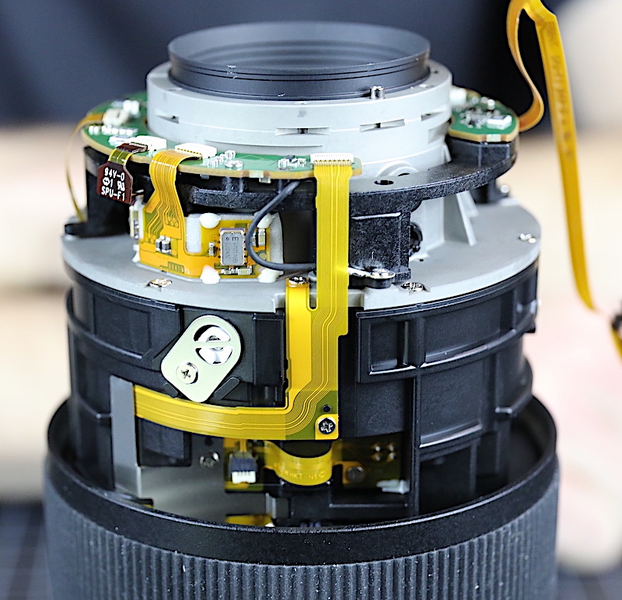
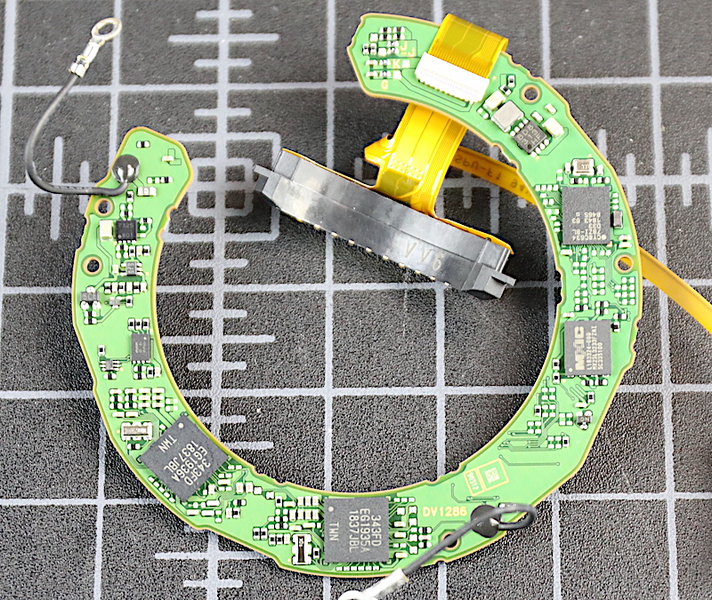

GeorgeHudetz
Well-Known Member
- Joined
- Mar 21, 2023
- Messages
- 898
Or perhaps just plug the cable in.I might see if I can dismantle it and then perhaps find a broken lens cheap to scavenge.
Or was that already checked?