I got a mail stating this will now be available in L-mount.
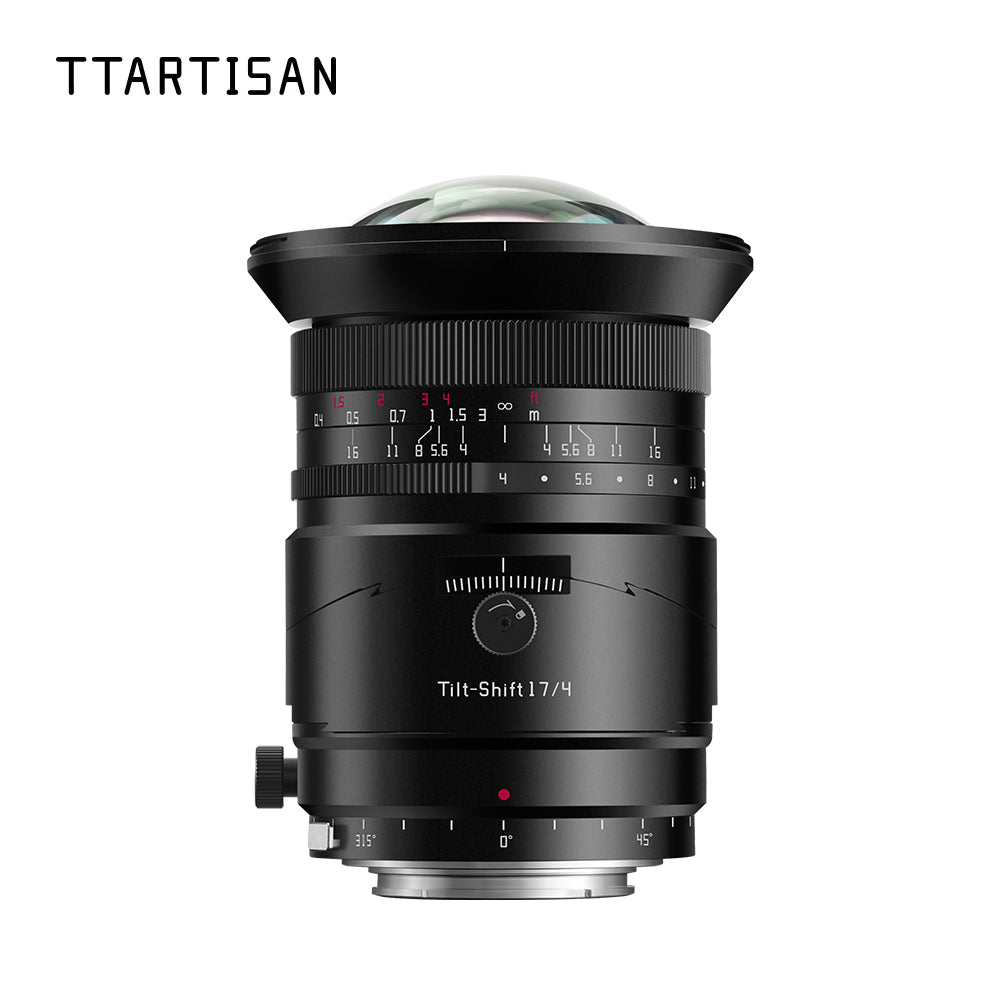
Not a general-use ultra-wide if for no other reason than it's massive, but for architecture and landscapes it could be very useful for some.
I have my reservations for such lenses. Specially for digital camera's today.
In past, during "analogue" film history. I had a Nikon 28mm shift lens. - No tilt.
To have a "reasonable" image quality, specially in the area by the shifted corners, you have to stop down to F8 - F11
By that, the depth of field is already over such a wide area, you have hardly benefit of the tilt setting.
(I never felt the shortcoming of no tilt setting by that Nikon lens).
Using a 17mm lens, the depth of field even is much more wide, that the benefit of the tilt setting hardly shall be noticed / needed.
But keep in mind by using such a wide angle, declining corner quality shall be noticed even much more early, by a relative slight "shift" setting.
Specially by the use of today’s digital camera's. The more or less "extreme" slanting light direction by shifted setting in relation to the sensor,
The optical quality shall be lowered even far more.
To avoid these problems "as far as possible", the lens is designed as a kind of extreme "retrofocus" design.
By that I guess, the lens shall have a noticeable distortion. At least "not" 100% distortion free at all.
Normally, distortion by itself can be corrected in a good way by digital tools today by post processing.
But only effective, by a "symmetrical" shape of the distortion.
But a not symmetrical shape of the distortion, by shift settings, a "shifted" distortion, to correct in a good way shall be a big challenge.
As you have no "learning points" how to correct the "weird" not "symmetrical" shape of distortion.
I doubt if it is possible "easy" by today’s corrections tools?? As a "shift" of lens distortion correction is not implemented by image editors.
A comparable issue as for vignetting into corners. But as you have to use small aperture openings anyway,
the vignetting into "one" direction by shift settings, is not that big of a problem for correction, for this.
If you keep in mind all those negative aspects, of what remains by image quality.
Using a high quality normal "fixed" - no tilt/shift lens, is far less problematic to correct by perspective.
As well as for correction of a "symmetrical" shape of the distortion, and vignetting.
Of-course, you shall lose resolution by these perspective corrections in post processing.
But by using a high MP model camera, plus the use of the "High-Res" mode. (4x pixel shift).
(In case of a Panasonic S1R ----> 187 MP image).
When you add up the pluses and minuses, I guess, the end quality is far better, than made by a tilt/shift lens.
-


 ttartisan.store
